
The problem
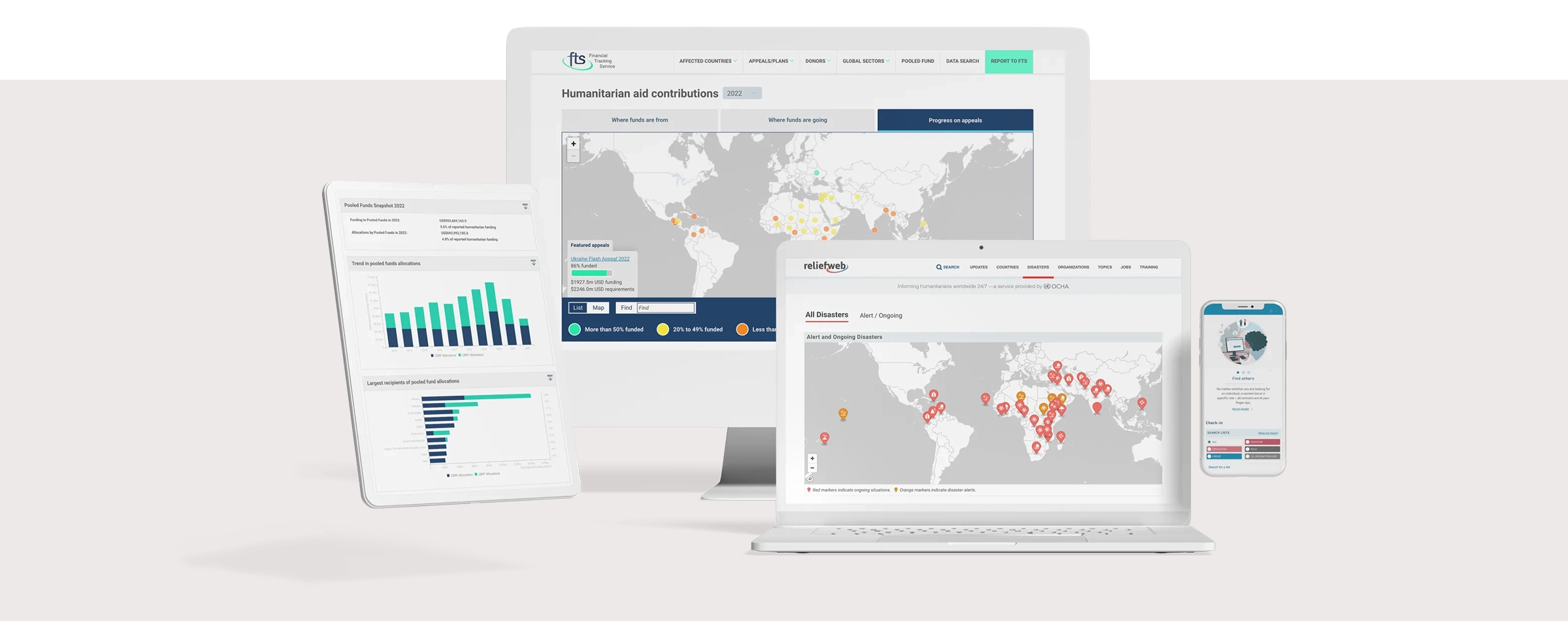
OCHA's responder contact lists lived in static spreadsheets, stored on hard drives and passed around on thumb drives. The same gaps ran through its Humanitarian Programme Cycle (HPC), the framework OCHA uses to plan, fund, manage and monitor its response to crises. There were no shared tools for crisis tracking, data collection, or monitoring and reporting against plans, so information didn’t follow a crisis from one phase to the next. The Financial Tracking Service (FTS), the canonical record of humanitarian financing worldwide, ran on aging systems that couldn't support new funding models. Every team had its own version of the truth, and strategic response planning slowed while people reconciled them.
Context
The United Nations Office for the Coordination of Humanitarian Affairs (OCHA) coordinates humanitarian work in crises. It brings UN agencies, NGOs and government staff together to support the people affected. FTS records all humanitarian funding reported worldwide, and OCHA uses it to track funding against its annual Global Humanitarian Overview. OCHA handles more than $20B in global humanitarian funds that flow to disaster-stricken areas. Governments, NGOs, universities and anyone else tracking humanitarian aid rely on FTS, so the numbers had to hold up to public scrutiny. Field conditions set hard limits, because responders work in remote crisis zones with little bandwidth. OCHA's goals were efficiency and transparency, through a system that tracks information across the whole lifecycle of a crisis.
Our approach
One data source for the HPC
Our work began with the ReliefWeb API and grew, task order by task order, into the HPC. OCHA and Phase2 formed a joint strategic planning team that designed a suite of connected tools for humanitarian response planning and monitoring, designed with four applications that share one data source. Phase2 built the HPC front end, then the HPC API and admin interface. Planning, funding and monitoring data now follow a crisis from one phase to the next instead of sitting in separate systems. The HPC API is public today, and OCHA’s organization identifiers, used across humanitarian data standards, are issued from it.
Migrating 150,000+ humanitarian funding records
FTS needed a new data foundation before it could support new funding models. The team restructured the data model first, then migrated the legacy data into it: 150,000+ contribution records, ~50,000 project records and ~30,000 supporting information records. External data feeds were integrated alongside the migrated history, and an administrative layer gives OCHA a place to manage incoming financial records. The Financial Tracking API was overhauled, with the frontend and the FTS public website rebuilt on top of it. The platform also moved to open-source software, to make it more accessible, transparent, and less dependent on proprietary licenses. Phase2 carried the new FTS through integration, launch rollout and launch support.
Opening ReliefWeb data through an API
ReliefWeb, OCHA's crisis and disaster information service, curates an archive that reaches back to the 1980s. This archive became an open data product through a full-featured content API. The team built it API-first, as a lightweight layer over an Elasticsearch datastore, so developers could query decades of humanitarian content quickly and flexibly. It was designed from the start to work on low bandwidth. Building it as an open API meant the data could serve any tool that came next, not just the website it was built for. That gave the humanitarian community an open data baseline for apps that analyze historical humanitarian data and for websites that pull ReliefWeb content in real time.
Humanitarian ID for field responders
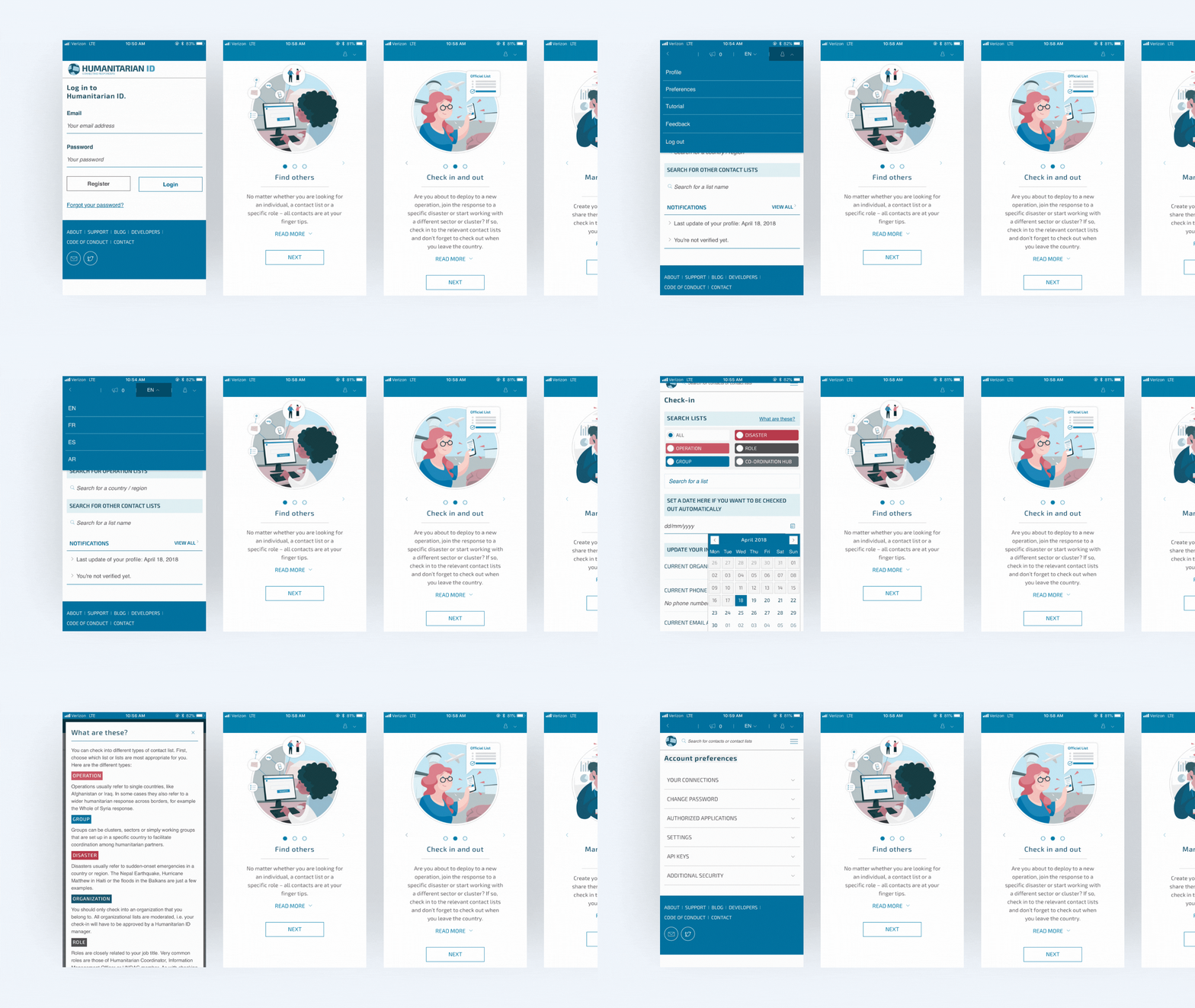
Humanitarian ID replaced the spreadsheet contact lists with a contact management app built on a full-featured authentication and profile system. Responders keep a personal profile, check in to a disaster, and use crisis websites such as ReliefWeb from that one profile. Response teams get up-to-date check-in records. They can monitor people in dangerous areas through geolocation and see which partner organizations available volunteers belong to. It was designed for the people at the edge of a response: a simple interface that needed little bandwidth, so it performed in remote crisis zones.The pilot served field teams working on global responses in the Philippines and Nepal.
Outcome
OCHA's financing data now sits on one restructured model, and The Financial Tracking Service (FTS) remains the record of reference for humanitarian funding worldwide. ReliefWeb’s archive is open to anyone through a free public API, now in its second version, and outside developers have published client libraries for it in Rust and Ruby. More than 150,000 contribution records came across, and an API serves the canonical record of humanitarian funding. Humanitarian ID turned contact lists that used to travel on thumb drives into live check-in records, and it supports hundreds of users in a given location on minimal bandwidth. The Humanitarian Programme Cycle (HPC) design puts its four applications on a single data source, so OCHA can follow a crisis from plan to funding to monitoring.
Data a global humanitarian system can trust didn’t start with dashboards. It started with the data model. If you're running critical work on aging systems and spreadsheets, get one trusted data source in place first. Once the model is right, your APIs, applications and field tools can all draw on the same insights.