
Problem
Imagine a loved one is seeking care. They need a primary care physician close to mass transit and appointment times that work with their schedule. They’re frustrated by the confusing, automated phone tree systems and the long wait times to speak to a scheduler.
Community Health Network understood this all too common challenge. They set out to transform the care landscape and deliver the ease of self-service to their community.
Context
Community Health Network, a central Indiana non-profit health system with deep community ties stretching across more than six decades, offers a full continuum of care that integrates hundreds of physicians, specialty and acute care hospitals, surgery centers, home care services, MedChecks, behavioral health, and employer health services.
Community Health Network focuses on population health management and to that end, they are transforming the consumer experience—providing exceptional care that is simply delivered.
Our approach
All Apps are Not Created Equal
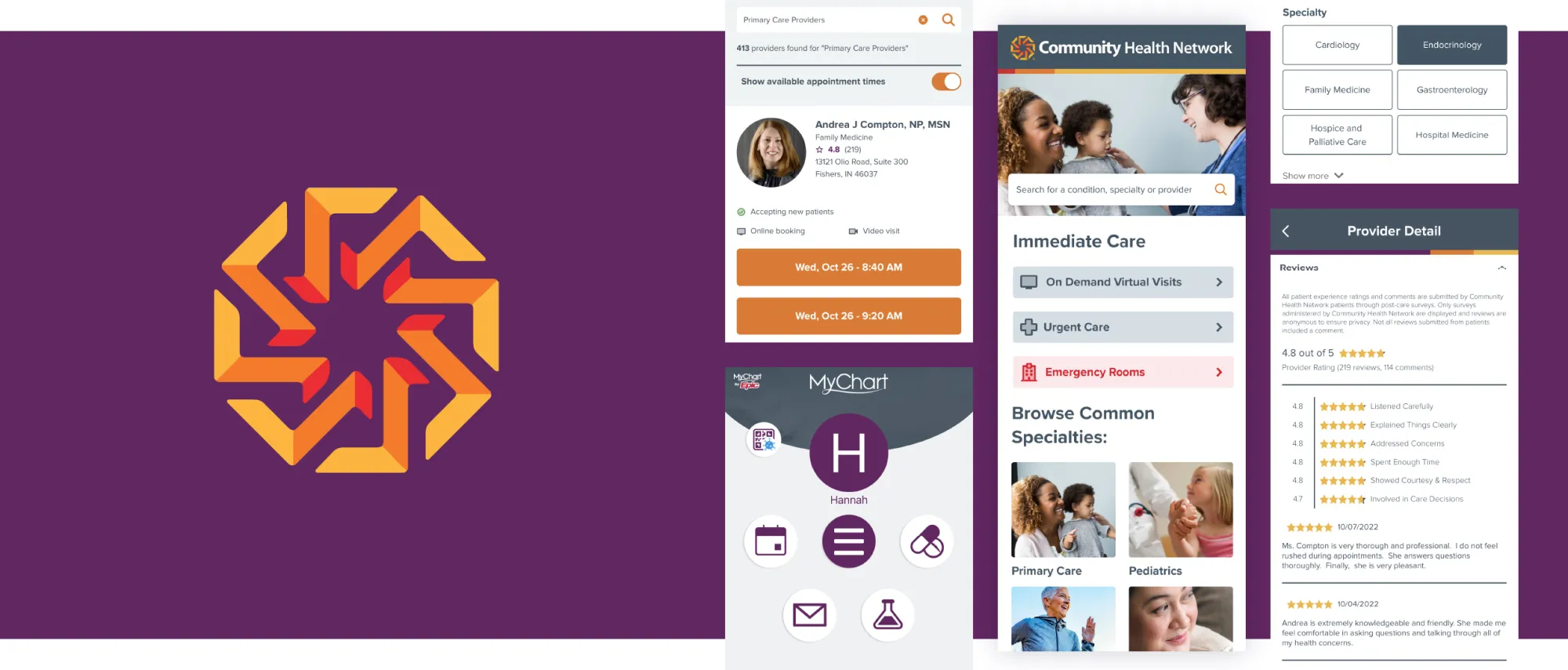
To fulfill their promise, Community sought to re-envision their mobile app for both iOs and Android. The key to this was a three-part integration which included their cloud-based electronic health record (EHR) platform, Kyruus, a provider search and appointment scheduling software, and DexCare, an additional scheduling tool that facilitates booking appointments at pharmacy clinics, urgent cares, and virtual visits. Community also wanted an updated design and UX for their app to achieve a modern, easy-to-use, on-brand app digital experience.
Phase2 built a React Native application as the foundation for all the third party integrations (EHR, Kyruus, DexCare) as well as consuming content from their Drupal platform’s content management system (CMS). Community’s app is a self-submitted app (vs. an EHR-submitted app). The consumer benefits of this type of app are many.
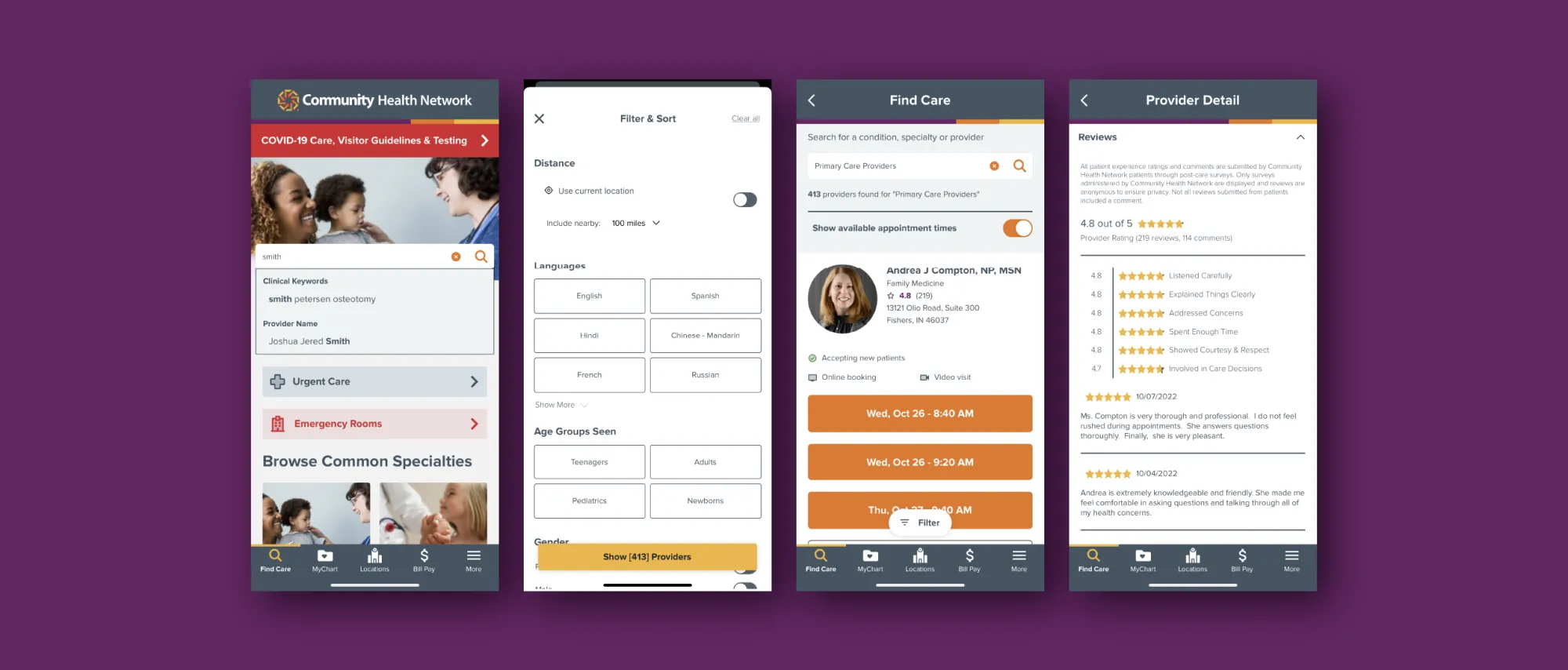
Seamless Integrations, Ease of Use
First, the app offers features not provided through the EHR—actions like accessing Community events, making urgent care appointments, and paying bills. Secondly, the app experience isn’t constrained by web browsers or limited to webviews from the parent site. This translates into easier, more intuitive interactions for the consumer. Additionally, native apps leverage a device’s capabilities—meaning, the Community app accommodates the design requirements from both platforms (unique behaviors, radio buttons, text boxes, etc.). The result? The experiences on Android and iOS devices feel familiar for the consumer.
For Community, the operational benefits are immense. The new app integrates with any API—it’s not limited to web-based technologies—providing ample room for future expansion. And any device’s accessibility APIs are integrated—like location services, GPS, and push notifications. Finally, this app is fully branded—allowing Community Health Network to have complete creative control over every aspect of their digital presence.